- 0
- 1,796 word
Twisha Sharma Case: How Does Indian Law Prove ‘Mental Cruelty’ In A Marriage?
The CBI chargesheet in the Twisha Sharma case has put the spotlight on mental cruelty. Lawyer Dhruv Chaudhry explains how Indian courts interpret it and what evidence can prove it.





The CBI’s chargesheet in the death of former model and actress Twisha Sharma has brought a long-standing legal question into focus: can psychological or mental cruelty be proved in an Indian court strongly enough to support charges of cruelty and abetment of suicide?
What Happened To Twisha Sharma?
Recommended Stories
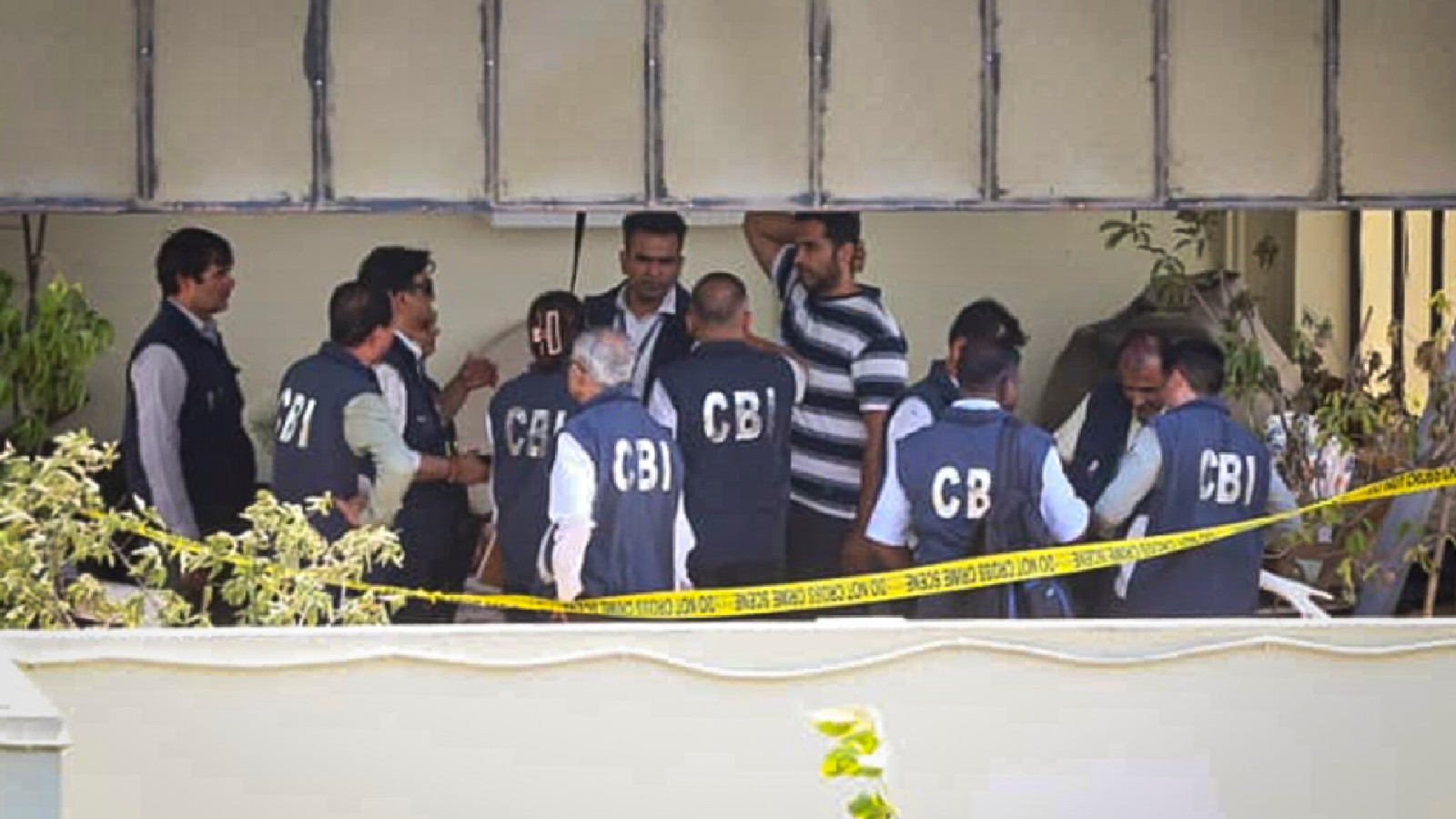
Twisha Sharma was found hanging at her marital home in Bhopal on 12 May 2026, five months after her marriage to advocate Samarth Singh. Her mother-in-law is retired district judge Giribala Singh. “Investigation revealed that both the accused persons had caused mental cruelty to the deceased to such an extent that she was left with no option but to end her life,” the CBI said in its final report submitted before a Bhopal court on Monday. The chargesheet invokes, among other provisions, Section 85 of the Bharatiya Nyaya Sanhita (BNS) for cruelty and Section 108 for abetment of suicide. An AIIMS medical board concluded the death was by suicidal hanging and found no injuries indicating physical assault or struggle.
A crucial distinction must be kept in mind. The chargesheet contains the investigating agency’s allegations and the material it has collected. These are not judicial findings. Guilt or innocence will be determined only after a full trial, when evidence is tested through cross-examination and the court delivers its verdict.
What Amounts To ‘Cruelty’ According To Indian Law
“Cruelty by a husband or his relatives was first introduced as a penal offence in 1986 through Section 498A of the Indian Penal Code,” explains lawyer Dhruv Chaudhry. “It has been retained essentially as it is under the Bharatiya Nyaya Sanhita, 2023, as Sections 85 and 86. Courts have therefore had nearly four decades to develop the contours of the provision—its meaning, ingredients and limits.”
Section 85 BNS makes it an offence for a husband or relative of the husband to subject a woman to cruelty. The maximum punishment is three years’ imprisonment and fine.
Section 86 defines “cruelty” for this purpose:
(a) any wilful conduct that is likely to drive a woman to commit suicide or to cause grave injury or danger to her life, limb or health (whether mental or physical); or
(b) harassment of a woman with the intention of coercing her or any person related to her to meet an unlawful demand for property or valuable security, or on account of failure to meet such a demand.
Observations contained in the various judgements of the Hon’ble Courts may be useful in understanding the nature of the offence. Some classic examples that continue to stand the test of time, according to Chaudhry are:
- In S. Hanumantha Rao v. S. Ramani, the court held that mental cruelty broadly means when either party causes mental pain, agony or suffering of such a magnitude that it severs the bond between the wife and husband and as a result of which it becomes impossible for the party who has suffered to live with the other party. In other words, the party who has committed wrong is not expected to live with the other party.
- In V. Bhagat v. Mrs. D. Bhagat, it was observed that it is not necessary to prove that the mental cruelty is such as to cause injury to the health of the petitioner. While arriving at such conclusion, regard must be had to the social status, educational level of the parties, the society they move in, the possibility or otherwise of the parties ever living together in case they are already living apart and all other relevant facts and circumstances. What is cruelty in one case may not amount to cruelty in another case. It is a matter to be determined in each case having regard to the facts and circumstances of that case.
- In Mohd. Hoshan v. State of A.P., the court held that mental or physical torture should be “continuously” practised by the accused on the wife. Whether one spouse has been guilty of cruelty to the other is essentially a question of fact. The impact of complaints, accusations or taunts on a person amounting to cruelty depends on various factors like the sensitivity of the individual victim concerned, the social background, the environment, education etc. Further, mental cruelty varies from person to person depending on the intensity of sensitivity and the degree of courage or endurance to withstand such mental cruelty. In other words, each case has to be decided on its own facts to decide whether the mental cruelty was established or not.
- In Smt. Raj Rani v. State (Delhi Administration), the court held that while considering the case of cruelty in the context of the provisions of Section 498A, the court must examine that allegations/accusations must be of a very grave nature and should be proved beyond reasonable doubt.
- In Sushil Kumar Sharma vs. Union of India, the Court explained the distinction of cruelty as provided under Section 306 and 498A IPC, observing that under Section 498A cruelty committed by the husband or his relation drives a woman to commit suicide etc., while under Section 306 IPC, suicide is abetted and intended. Therefore, there is a basic difference of the intention in application of the said provisions.
- In Girdhar Shankar Tawade v. State of Maharashtra, the court held that “cruelty” has to be understood having a specific statutory meaning provided in Section 498A IPC and there should be a case of continuous state of affairs of torture by one to another.
Cruelty for the purpose of Section 498-A IPC (now reflected in the BNS) is to be established in the context of that provision. It is to be determined by considering the conduct of the man, weighing the gravity or seriousness of his acts and to find out as to whether it is likely to drive the woman to commit suicide etc. It is to be established that the woman has been subjected to cruelty continuously/persistently or at least in close proximity of time of lodging the complaint. Petty quarrels cannot be termed as ‘cruelty’ to attract the provisions. Causing mental torture to the extent that it becomes unbearable may be termed as cruelty.
What Evidence Can Establish Mental Cruelty?
The nature of matrimonial life is private, and most events within a marriage take place inside the matrimonial home, away from the view of outsiders. According to Chaudhry, “Mental cruelty, therefore, may not always be proved by a direct eyewitness. It is usually established by considering the overall effect of oral statements, documents, medical records, digital communications and surrounding circumstances.”
- WhatsApp messages, emails, social-media chats, voice notes and call recordings may reveal threats, insults, humiliation, character attacks, financial pressure, unlawful demands, isolation or repeated abusive behaviour. The complete conversation is more reliable than a few selected screenshots. It is also necessary to prove who sent the messages and whether they are genuine and complete. This may be done through the original phone, account details, dates and other technical information stored with the message, cloud backups, records obtained from the service provider and, where necessary, forensic examination and the prescribed electronic-evidence certificate. Call-detail records can show when and how often calls were made, but cannot show what was said during those calls.
- Medical and counselling records may show that the woman was suffering from anxiety, depression, fear or other mental distress. However, such records do not by themselves prove who caused that condition.
- Statements of family members, friends, neighbours, colleagues or domestic workers may also be relevant, particularly where they personally witnessed the conduct or received complaints at the time.
- CCTV footage, diaries, bank and UPI records, location data and deleted or recovered messages may further help reconstruct the conditions in which the woman was living.
The Court must consider the evidence as a whole and decide whether it proves serious cruelty, rather than ordinary disagreements or occasional quarrels between spouses.
What Can Individuals Do?
On the process of seeking redressal, Chaudhry notes, “Redressal involves providing information to the police. If the information discloses the commission of an offence, it should result in the registration of an FIR. Upon investigating the allegations, if the Police finds material supporting the victim’s claims, it will file a chargesheet and proceed to prosecute the accused.”
Alternatively, a complaint may be brought before the magistrate who may either direct registration of an FIR or try the case himself based on the complaint brought before him.
Needless to say, the victim has the right to approach the court at any time and seek its intervention to redress all complaints, including the failure of the police to file an FIR, investigate properly or file a timely and comprehensive chargesheet.
Key Questions Answered
 Ask News18
The Bharatiya Nyaya Sanhita (BNS) retains the penal offence of cruelty by a husband or his relatives, which was first introduced in 1986 through Section 498A of the Indian Penal Code, as Sections 85 and 86. Mental torture that becomes unbearable can be considered cruelty under the BNS.
Ask News18About the Author


Original source: https://www.news18.com/
Author

admin@myncblogs.com