- 0
- 888 words


CM Who Lost His Own Bypoll: India’s First Political Upset, As Bankipur Updates Roll In
As by-election results dominate headlines in Bihar, Gujarat and MP, here’s a look back at the only time a sitting UP Chief Minister lost an Assembly byelection and had to step down

Summarized by AI.




Uttar Pradesh News: As counting continues for the Bankipur (Bihar), Manjalpur (Gujarat) and Datia (Madhya Pradesh) Assembly by-elections, political parties across the country are closely watching every round of results. While by-elections are often seen as a test of the ruling government’s popularity, the 2026 contests have already produced several surprises.
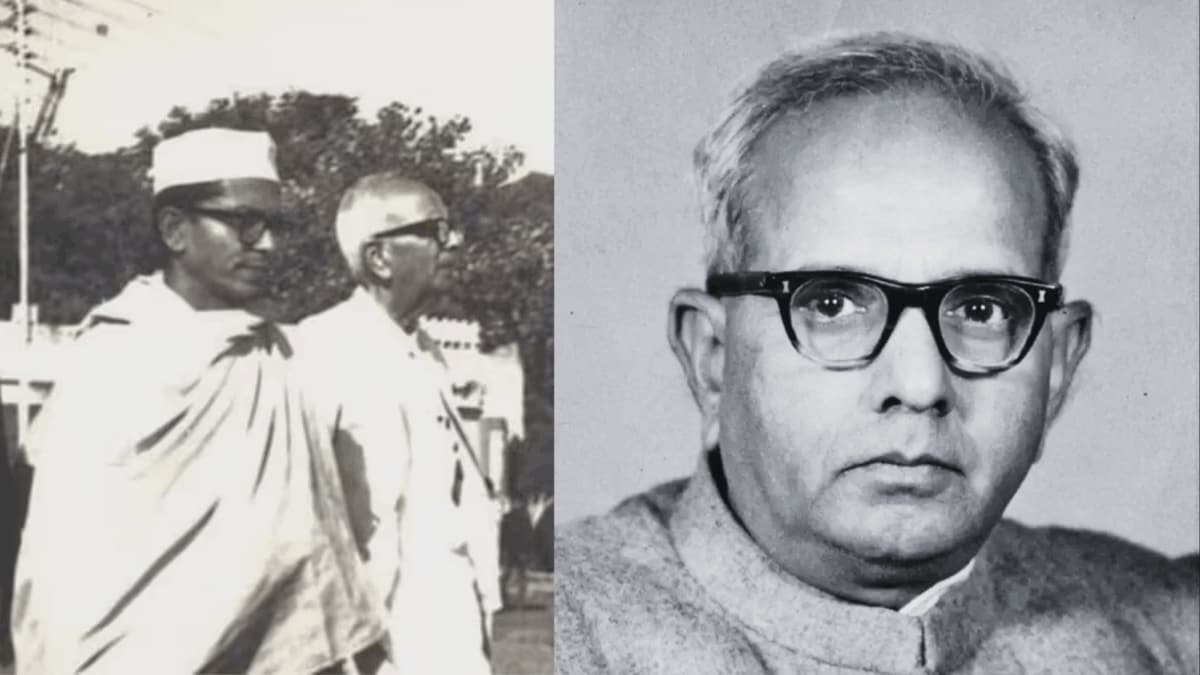
Against this backdrop, one of the most remarkable by-election stories in Indian politics has once again come into focus: the defeat of Uttar Pradesh Chief Minister Tribhuvan Narain Singh in the 1971 Maniram Assembly by-election.
Recommended Stories
The election remains significant because it is widely regarded as the first instance in India in which a sitting Chief Minister lost an Assembly by-election, forcing him to resign under constitutional provisions.
Who Was Tribhuvan Narain Singh?
Tribhuvan Narain Singh was a prominent politician from Uttar Pradesh who began his political career with the Congress before joining Congress (Organisation) after the party split.
He became Chief Minister of Uttar Pradesh on October 18, 1970, after the collapse of the Samyukta Vidhayak Dal (SVD) government following the resignation of Chaudhary Charan Singh. However, Tribhuvan Narain Singh was not a member of either the Uttar Pradesh Legislative Assembly or Legislative Council when he took oath as Chief Minister.
Under Article 164(4) of the Constitution, a person appointed as Chief Minister without being a member of the state legislature must get elected to the Legislative Assembly or Legislative Council within six months. Failing to do so means the Chief Minister cannot continue in office.
To fulfil this constitutional requirement, Tribhuvan Narain Singh contested the Maniram Assembly by-election in Gorakhpur after the seat fell vacant.
A By-Election That Became A National Political Battle
What was expected to be a straightforward contest for the sitting Chief Minister soon turned into one of the biggest political battles of the time.
The Congress had split, with Prime Minister Indira Gandhi leading one faction and Congress (O) forming the other.
Determined to defeat the Chief Minister, Indira Gandhi’s Congress fielded Ramakrishna Dwivedi as its candidate. According to political accounts, several senior Congress leaders were reluctant to contest against a sitting Chief Minister, but Indira Gandhi personally persuaded Dwivedi to enter the race.
Meanwhile, Tribhuvan Narain Singh received support from several prominent opposition leaders, including Atal Bihari Vajpayee, Raj Narain and Karpoori Thakur, all of whom campaigned extensively for him.
The by-election quickly evolved from a local contest into a high-profile national political showdown.
The Result That Shocked Indian Politics
When votes were counted on January 26, 1971, the outcome stunned the political establishment.
Ramakrishna Dwivedi defeated Chief Minister Tribhuvan Narain Singh, making him the first sitting Chief Minister in Indian political history to lose an Assembly by-election. Since Tribhuvan Narain Singh had failed to become a member of the Assembly within the constitutional time limit, he had no option but to resign as Chief Minister.
Ramakrishna Dwivedi’s victory earned him the nickname ‘Giant Killer’, and the election became one of the most talked-about contests in Indian political history.
Why The 1971 Maniram By-Election Is Still Remembered
More than five decades later, the Maniram by-election continues to be cited as one of the most extraordinary elections in Uttar Pradesh’s political history.
The contest demonstrated that even a sitting Chief Minister was not immune to the verdict of the electorate and reinforced the constitutional principle that political office ultimately depends on public support.
As fresh by-election results emerge from Bihar, Gujarat and Madhya Pradesh, the story of Tribhuvan Narain Singh’s defeat serves as a reminder of one of the most dramatic examples of democratic accountability in India, where voters brought down a serving Chief Minister through the ballot box.

Original source: https://www.news18.com/
Author

admin@myncblogs.com
Related Posts
ITR Filing 2026 Deadline Extension News Highlights: Who Can File Return Till August 31? Know Income Tax Updates
- 0
- 3,913 words
News business tax ITR Filing 2026 Deadline Extension News Highlights: Who Can File Return Till August 31? Know Income Tax UpdatesITR Filing...
Read out all
Kareena Kapoor Khan’s Holiday Bag Is Worth Lakhs: Meet The Hermès Constance And Its Famous Siblings
- 0
- 741 words
News Photogallery lifestyle fashion Kareena Kapoor Khan's Holiday Bag Is Worth Lakhs: Meet The Hermès Constance And Its Famous Siblings Kareena Kapoor...
Read out all
Quote Of The Day By Rabindranath Tagore: ‘The Butterfly Counts Not Months But…’
- 0
- 391 words
News Photogallery lifestyle events Quote Of The Day By Rabindranath Tagore: ‘The Butterfly Counts Not Months But…’ Quote Of The Day By...
Read out all
‘Grab Them By The…’ To ‘Beat The F**king Sh*t Out Of Them’: Trump’s Most Viral Expletives That Became Bigger News Than His Politics
- 0
- 781 words
News Photogallery viral 'Grab Them By The...' To 'Beat The F**king Sh*t Out Of Them': Trump's Most Viral Expletives That Became Bigger...
Read out all
Shweta Tiwari Shares First Post Amid Ex-Husband Raja Chaudhary Cheating Allegations, Comments On Palak Tiwari
- 0
- 821 words
Shweta Tiwari Shares FIRST Post Amid Raja Chaudhary's Allegations, Remarks On Palak Tiwari: 'Whom To Trust...' Published By :Kashvi Raj Singh,News18.comLast Updated:July...
Read out all
Bhogapuram Airport Opens Aug 1: ₹300 Bus, ₹800+ Cabs, Why Vizag Flights Are Shifting, Name’s Backstory
- 0
- 751 words
Bhogapuram Airport Opens Aug 1: ₹300 Bus, ₹800+ Cabs, Why Vizag Flights Are Shifting, Name's Backstory Published By :Parishmita Saikia,News18 CitiesLast Updated:July...
Read out all