- 0
- 686 words
Why Is Onam Sadya Served On A Banana Leaf? Here’s The Story Behind The Tradition
From its connection to King Mahabali to the precise placement of dishes on a banana leaf, here’s everything to know about Kerala’s iconic Onam feast.
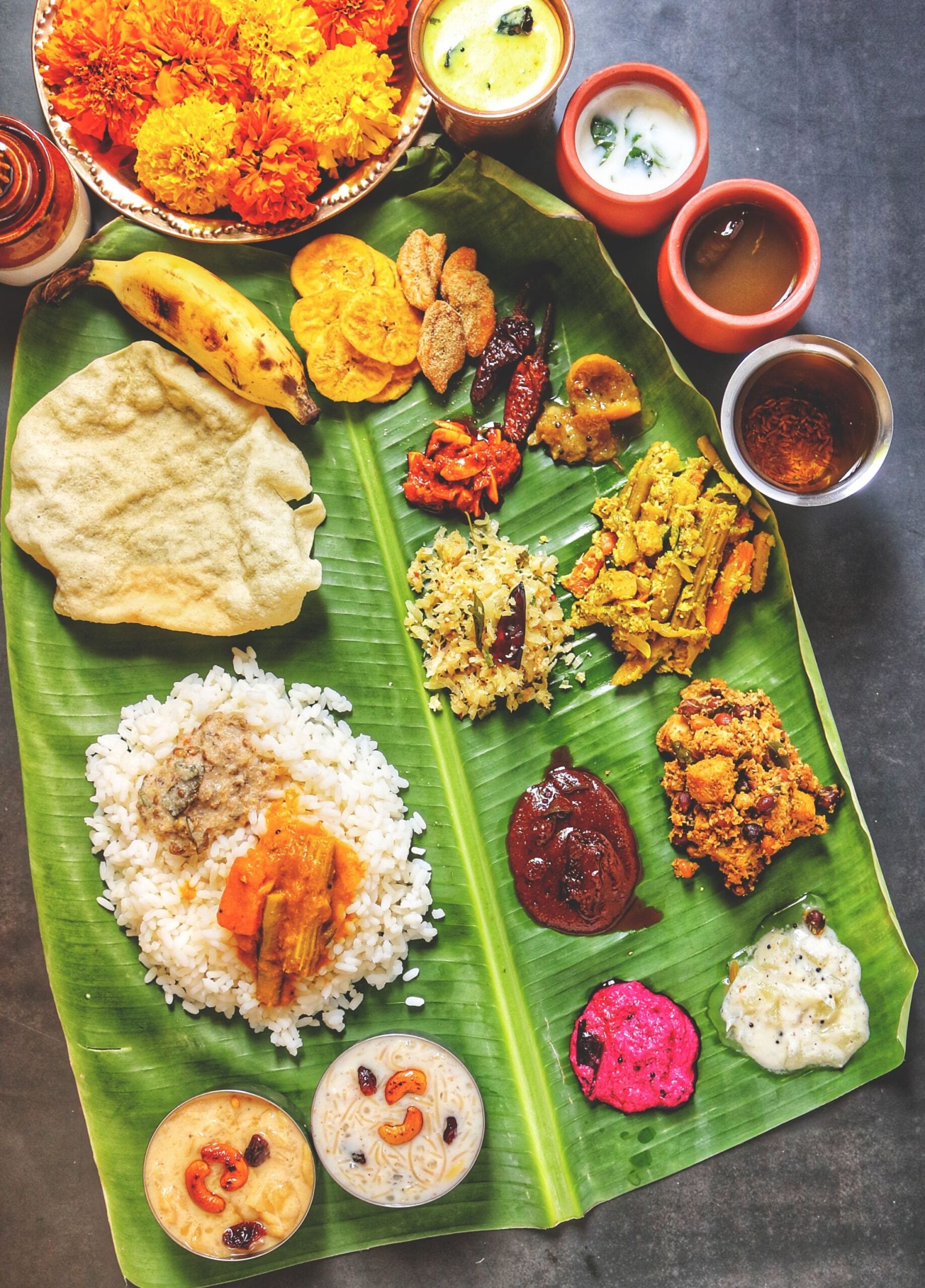
One of the biggest highlights of Onam celebrations in Kerala is the Onam Sadya, or Onasadya—a lavish traditional vegetarian feast served on a fresh banana leaf. Often featuring more than 20 dishes, the elaborate meal brings together curries, vegetables, pickles, snacks, rice and desserts in a carefully planned spread. Preparing a Sadya is also a communal affair, with families spending hours cooking and assembling the feast.
Onam is primarily celebrated as a harvest festival and is deeply connected to the legend of King Mahabali, a beloved and prosperous ruler. According to Hindu mythology, Mahabali was sent to the netherworld after Lord Vishnu appeared as Vamana and asked him for three paces of land. Mahabali was eventually granted permission to visit his people once a year. Onam is believed to mark this annual homecoming, with families celebrating by showcasing their happiness and prosperity.
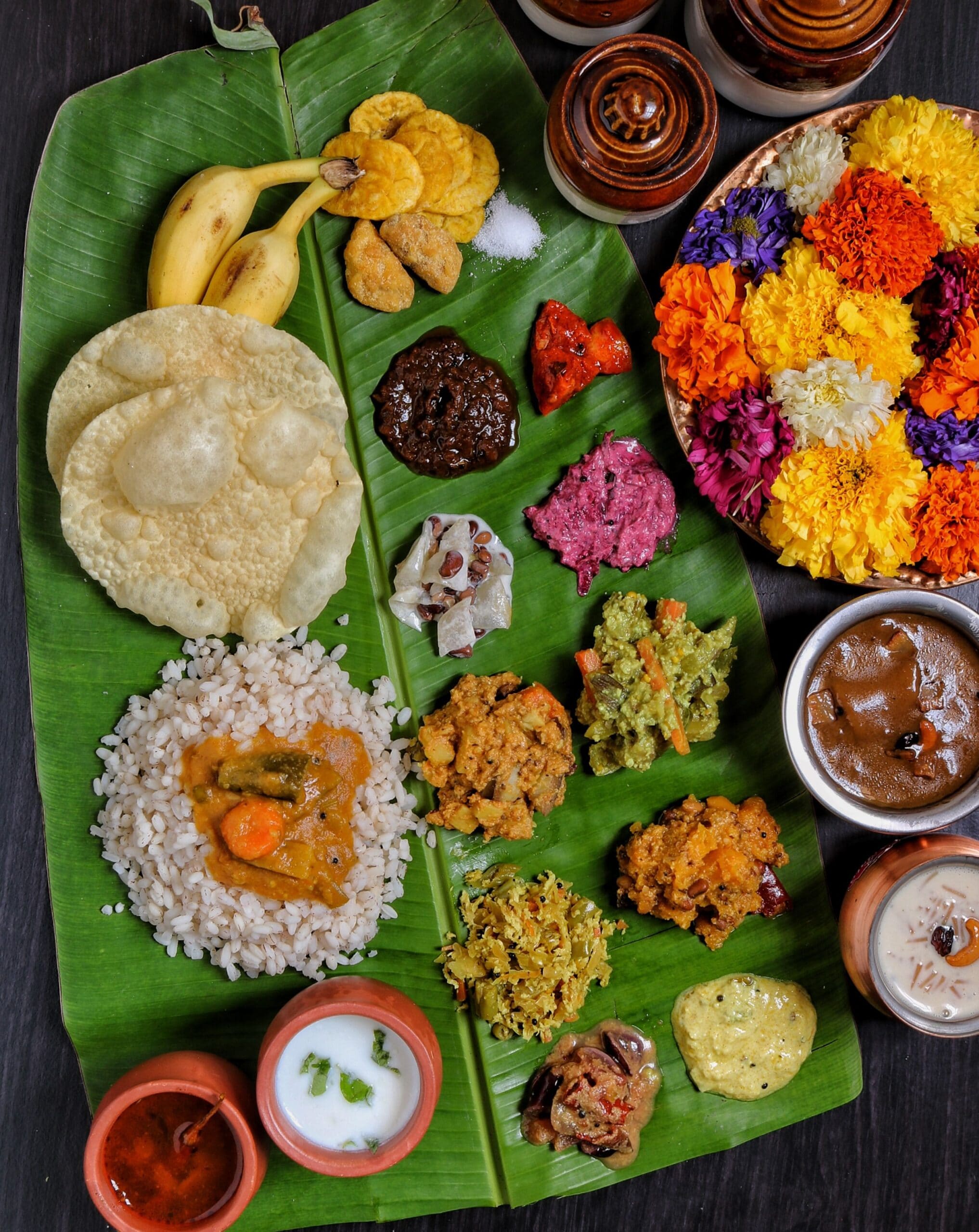
The grand feast is central to Onam because food, abundance and togetherness are woven into the festival’s celebration of prosperity. Traditionally, the Sadya brings together a remarkable variety of flavours and textures without meat or fish. The meal showcases Kerala’s culinary heritage through locally available vegetables, coconut, yoghurt, lentils, spices and rice, turning a single banana leaf into an elaborate culinary experience.
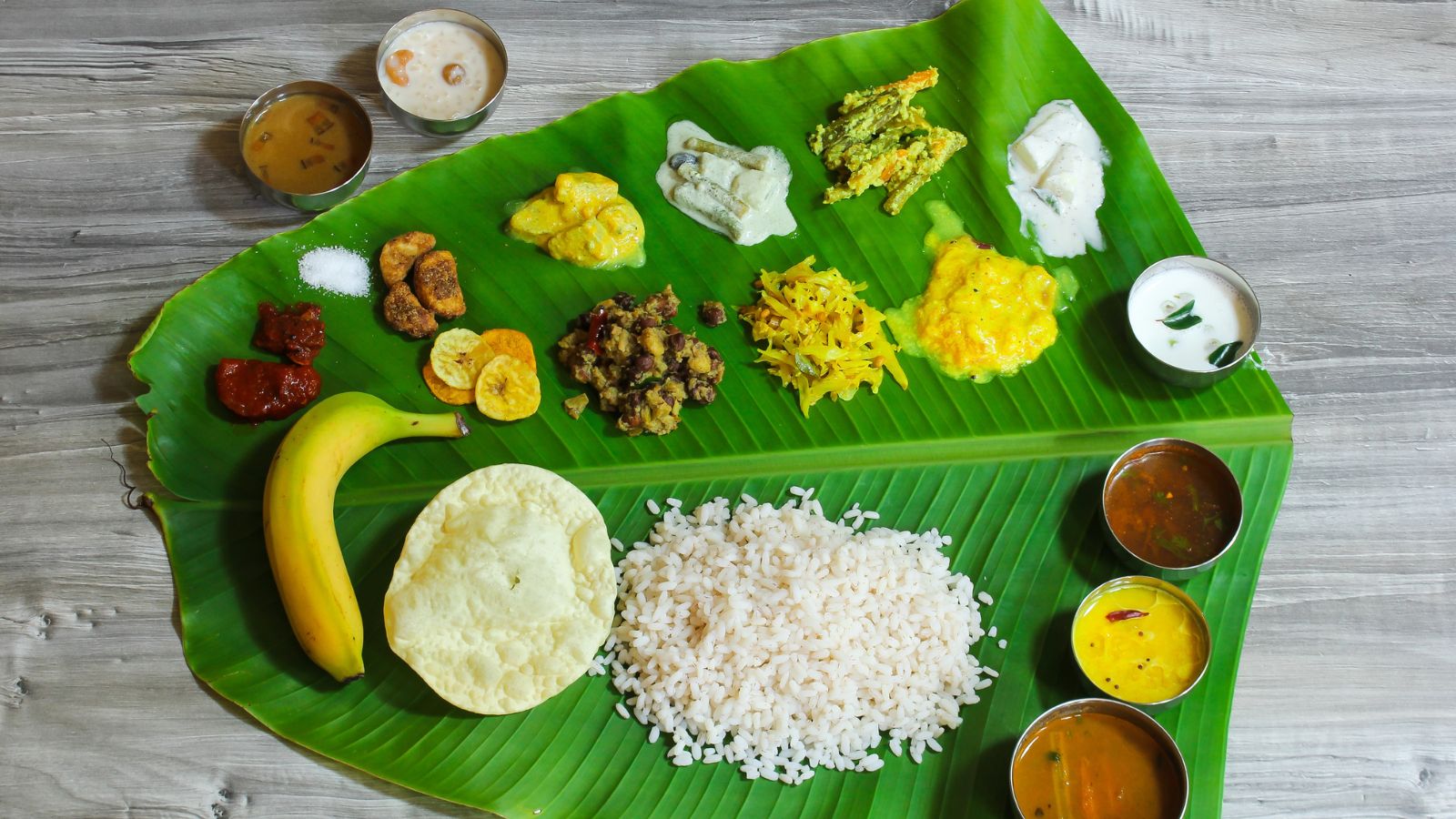
The banana leaf is an integral part of the Sadya experience. Beyond being a natural and biodegradable plate, it has long been part of Kerala’s food traditions. The dishes are arranged in a customary order, with smaller accompaniments such as pickles, banana chips and puli inji occupying one section, while vegetables, curries and other preparations are placed around the rice. Traditionally, the leaf is folded after the meal as part of the dining ritual.
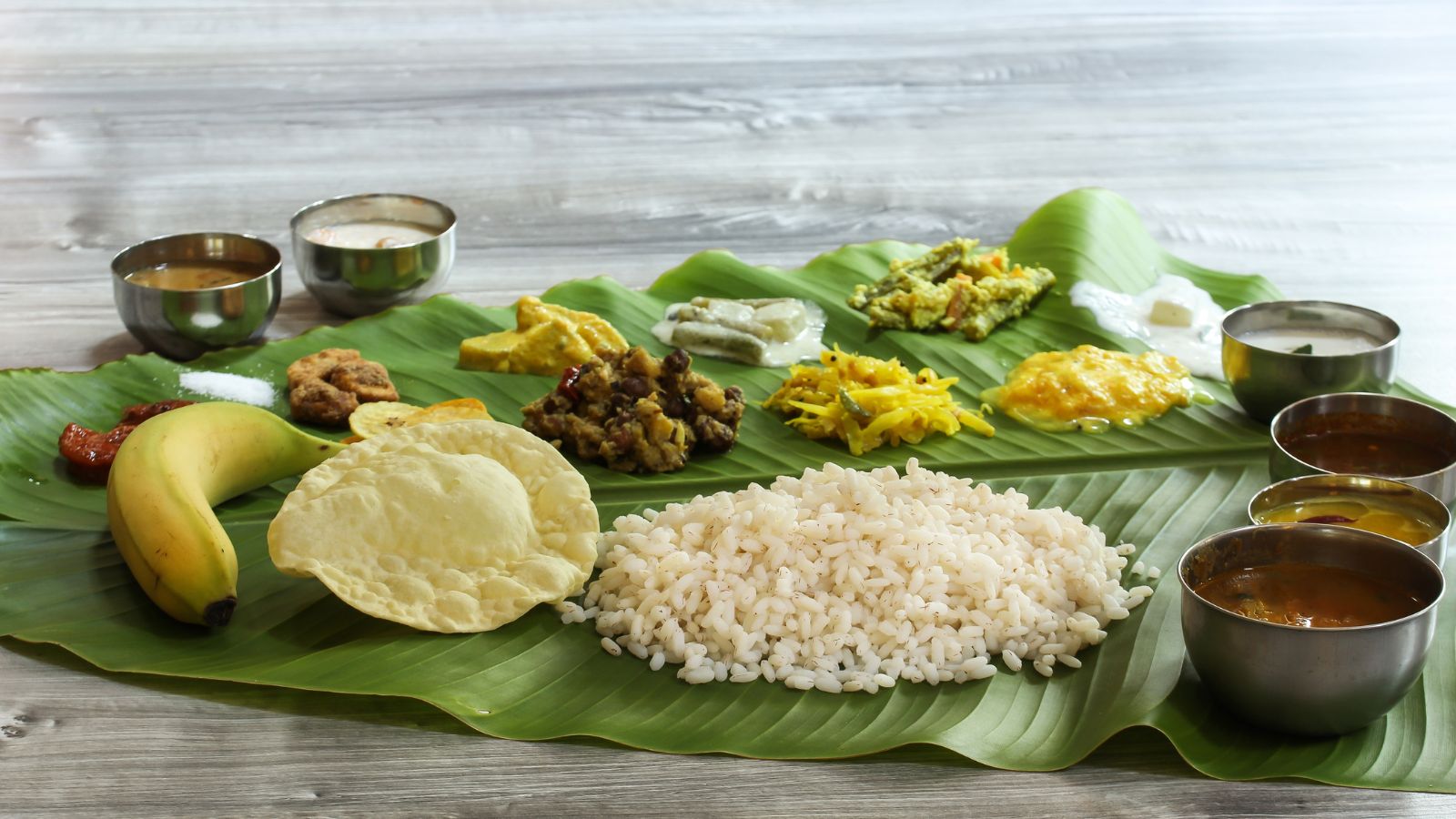
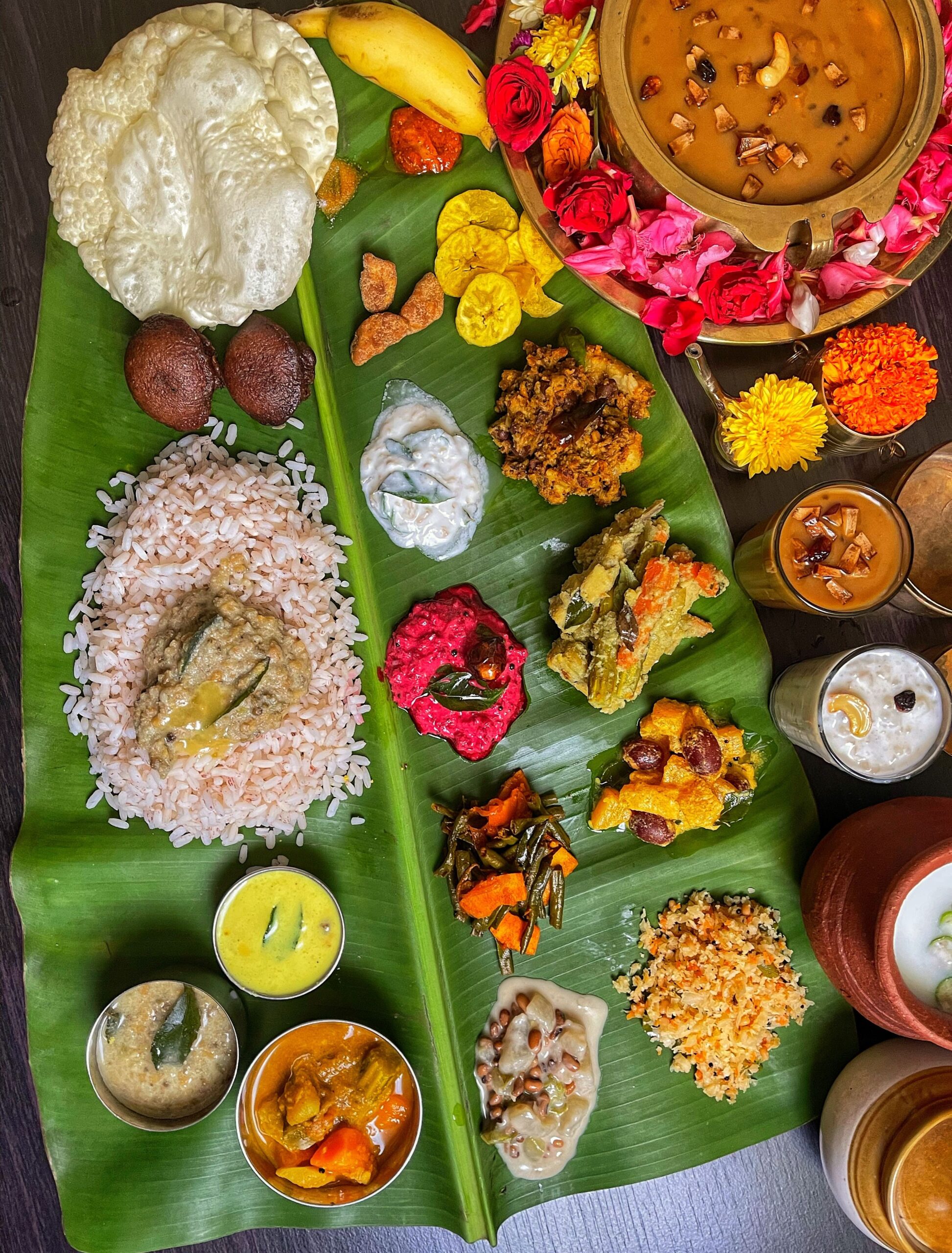
A traditional Sadya can include a dazzling variety of dishes. Avial, a mix of vegetables cooked with coconut, is among the best-known preparations, while Olan combines ash gourd and beans with coconut milk. Thoran, Kalan, Erissery, Kootu Curry, Theeyal, Pachadi and Kichadi add different textures and flavours. Sambar, rasam, parippu and moru curry complete the progression, creating a balance between spicy, tangy, creamy and mildly flavoured dishes.
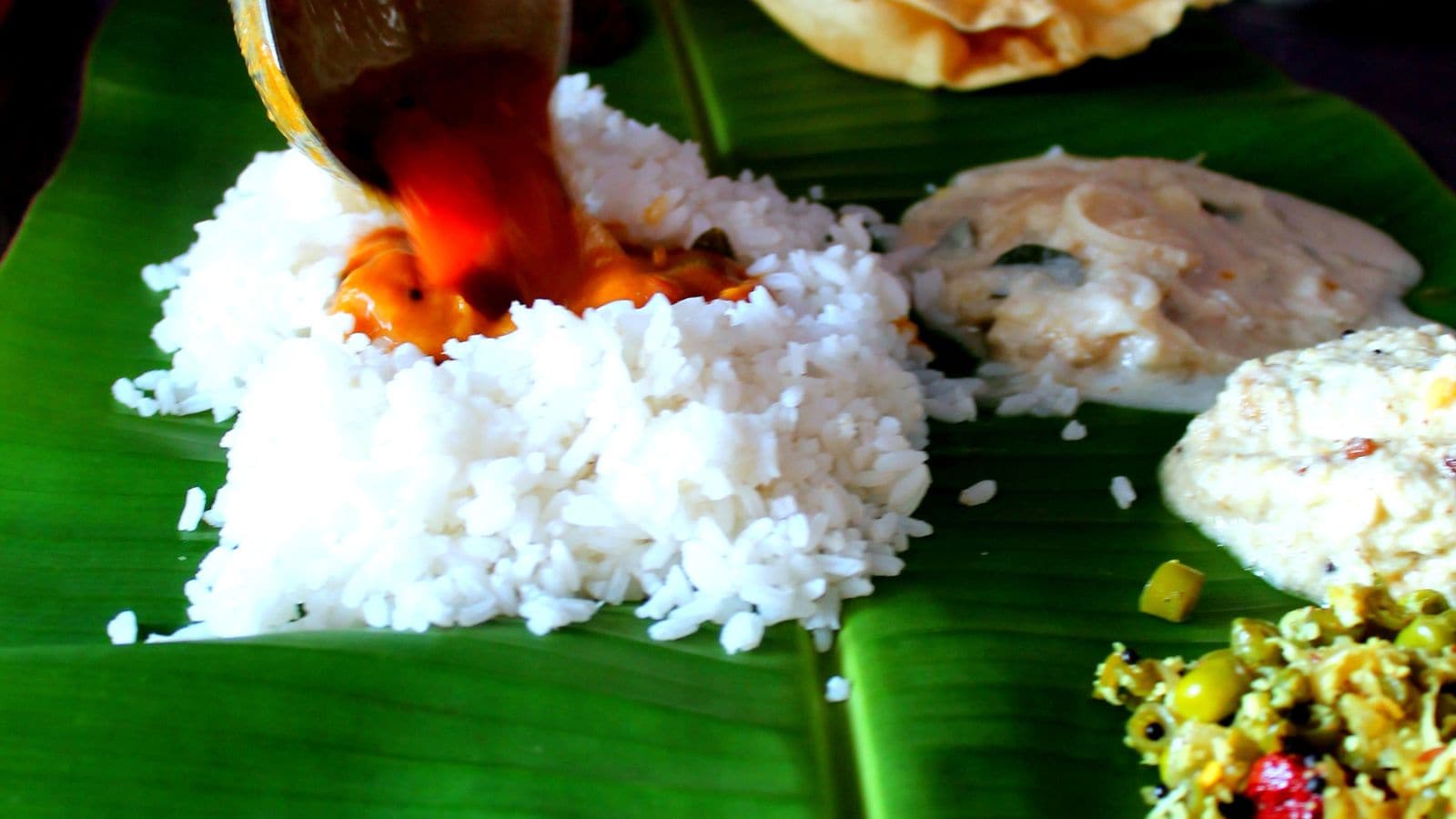
No Sadya is complete without its collection of accompaniments. Crisp banana chips and pappadam provide crunch, while sharkara upperi, or jaggery-coated banana chips, brings sweetness to the spread. Pickles and inji puli, a punchy preparation made with ginger and tamarind, add sharp, tangy flavours. These smaller portions may occupy less space on the banana leaf, but they play an important role in balancing the meal.
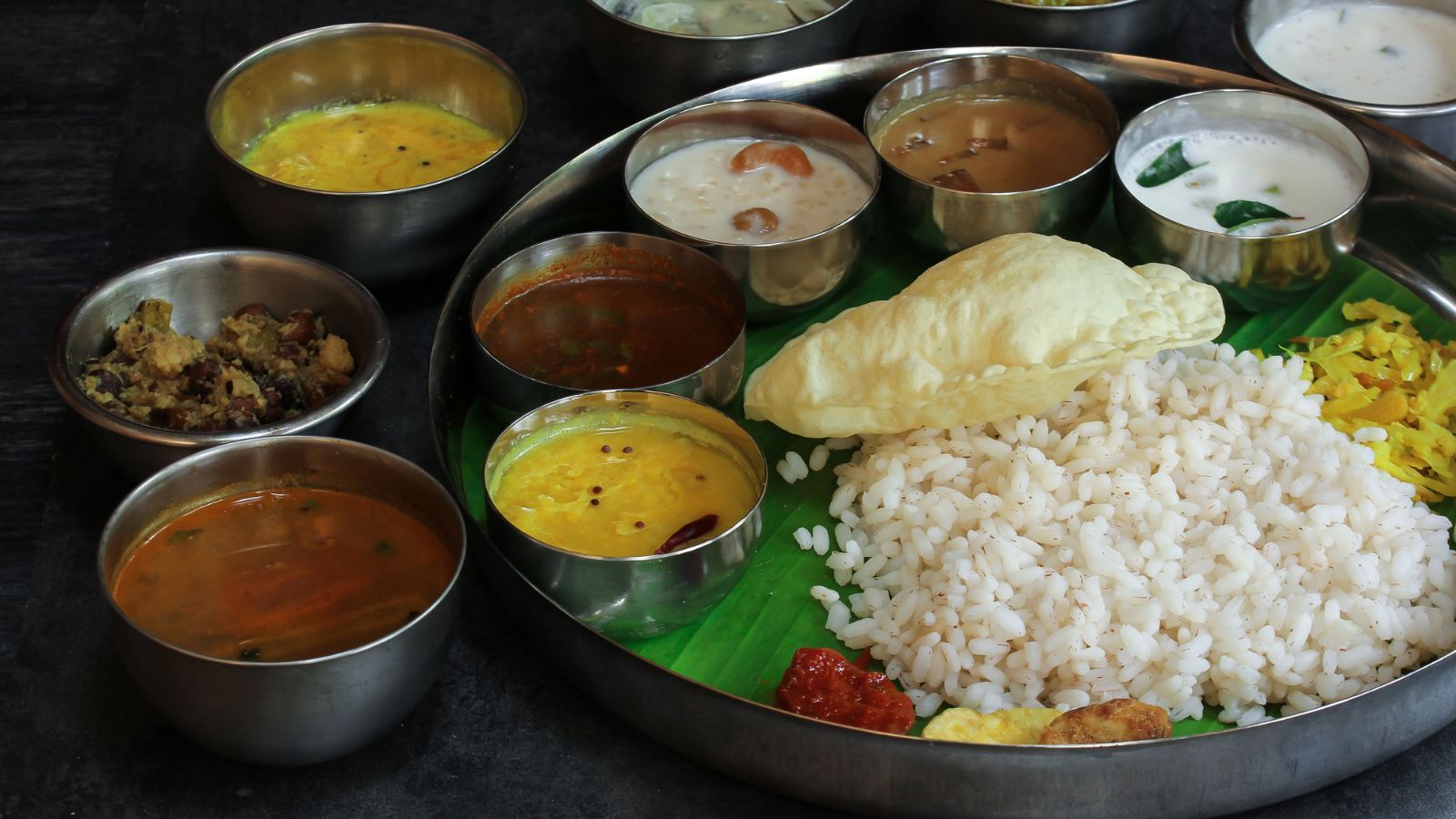
At the centre of the meal is usually Kerala matta rice, the distinctive reddish-brown parboiled rice variety popular in the state. It is eaten with different combinations of curries, beginning with preparations such as parippu and ghee and moving through sambar and rasam. But the meal doesn’t end there. Curd or buttermilk provides a cooling finish before the much-awaited dessert course.
The grand finale of an Onam Sadya is payasam, Kerala’s beloved festive pudding. Different varieties may be served, including creamy Palada Payasam and jaggery-based Ada Pradhaman. Made with ingredients such as rice, milk, jaggery, coconut milk or rice ada, payasam brings the elaborate feast to a suitably indulgent end. More than just a meal, the Sadya remains a celebration of Kerala’s agricultural abundance, culinary traditions and the spirit of togetherness at the heart of Onam.
Original source: https://www.news18.com/cricket/
Author

admin@myncblogs.com
Related Posts

Army Veteran Flags ‘Major Mistake’ In Operation Safed Sagar, Demands Public Apology
- 0
- 624 words
News movies web-series Army Veteran Flags 'Major Mistake' In Operation Safed Sagar, Demands Public ApologyArmy Veteran Flags 'Major Mistake' In Operation Safed...
Read out allIran-US War News Live Updates: Trump Says Turkiye Plane Switch Was ‘Up To Secret Service’
- 0
- 2,158 words
Live nowNews world Iran-US War News Live Updates: Trump Says Turkiye Plane Switch Was ‘Up To Secret Service’Iran-US War News Live Updates:...
Read out all
Joe Root’s First Order In Charge: ‘Let’s Be Adults, No More Curfews’
- 0
- 611 words
News cricket Joe Root's First Order In Charge: 'Let's Be Adults, No More Curfews'Joe Root's First Order In Charge: 'Let's Be Adults,...
Read out all
Ex-Cricketer Accuses Pakistani Stars Of Being Too ‘Focussed On Earning Money’
- 0
- 461 words
News cricket Ex-Cricketer Accuses Pakistani Stars Of Being Too 'Focussed On Earning Money'Ex-Cricketer Accuses Pakistani Stars Of Being Too 'Focussed On Earning...
Read out allWhy Is Onam Sadya Served On A Banana Leaf? Here’s The Story Behind The Tradition
- 0
- 686 words
News Photogallery lifestyle food Why Is Onam Sadya Served On A Banana Leaf? Here's The Story Behind The Tradition Why Is Onam...
Read out allSurya Grahan 2026: What Astrological Warnings Signal For Maharashtra, Tamil Nadu, Odisha, Bengal?
- 0
- 1,567 word
News Photogallery cities mumbai-news Surya Grahan 2026: What Astrological Warnings Signal For Maharashtra, Tamil Nadu, Odisha, Bengal? Surya Grahan 2026: What Astrological...
Read out all