- 0
- 1,234 word


Bengalureans May Soon Pay Up To Rs 25,000 A Year To Park Outside Homes: New Parking Rules Explained
Draft Greater Bengaluru Authority rules propose annual permits for roadside parking, steep fines, and bans near Metro stations, footpaths; objections open for 30 days.





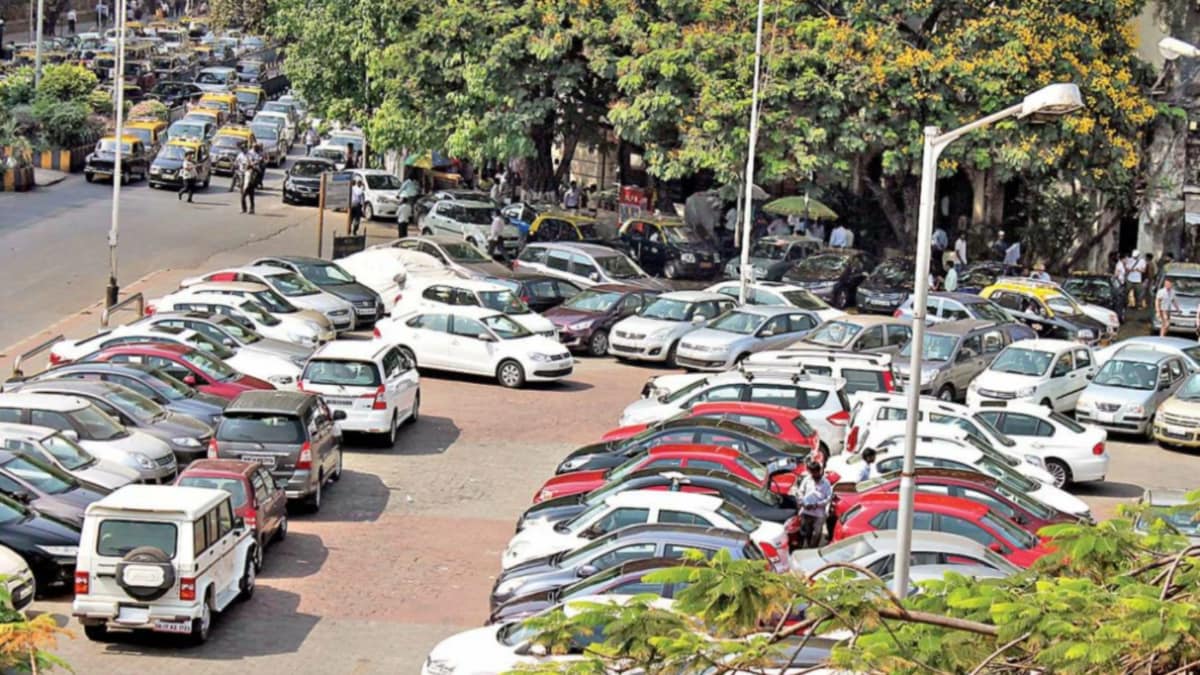
Bengaluru is set to put a price on one of its most contested public resources — road space. Residents who park outside their own homes will soon need annual permits, with fees running into thousands of rupees depending on vehicle type, under the draft Greater Bengaluru Authority (GBA) Parking Rules, 2026.
The draft, issued on August 11, doesn’t stop at residential streets. It proposes a complete ban on parking along arterial roads classified as high-density corridors, peak-hour restrictions on select roads notified by traffic police, and detailed setback rules keeping vehicles away from junctions, bus stops, transit hubs, pedestrian crossings and footpaths.
Recommended Stories
Parking on footpaths is banned outright. On-street parking will initially be barred within 150 metres of Metro and suburban rail stations — a radius city corporations can expand up to 500 metres — a change expected to hit several high-footfall Metro station areas where commuters currently rely on nearby roads to park.
What Exactly Will Residents And Motorists Have To Pay?
| Category | Proposed Rate / Rule |
|---|---|
| Annual residential permit — Hatchback | Minimum Rs 15,000/year |
| Annual residential permit — Sedan | Minimum Rs 20,000/year |
| Annual residential permit — SUV | Minimum Rs 25,000/year |
| Non-residential hourly parking (2-wheelers & LMVs) | Rs 10 to Rs 80/hour, based on road category (A/B/C) |
| Non-residential monthly pass | Rs 1,000 to Rs 4,000 |
| Road Category A | Commercial roads drawing footfall from across the city |
| Road Category B | Commercial roads drawing footfall from surrounding neighbourhoods |
| Road Category C | Other commercial roads, mostly local catchment |
| Bicycles | Parking free of cost |
| Off-peak discount (off-street, 8 pm–8 am) | 50% off monthly rate |
Only pickup and drop-off — capped at five minutes — will be allowed, and only at points designated by city corporations. Bicycles remain exempt from charges altogether, and off-street parking between 8 pm and 8 am comes with a 50 per cent discount, a nod toward encouraging off-peak and public transit use.
Who Will Enforce All This, And What Happens If You Break The Rules?
In a departure from the current system, the draft authorises private operators running public parking facilities to issue violation notices, collect charges, and tow or clamp vehicles — but only after formal authorisation from city corporations, and only after recording video evidence before any tow.
Traffic police will continue to oversee towing and retain their existing enforcement powers, including action against repeat offenders.
| Violation / Condition | Cars | Two-Wheelers |
|---|---|---|
| Illegal parking on roads | Rs 500 | Rs 300 |
| Parking on footpaths | Rs 1,000 | Rs 600 |
| Permit validity | One year from issue | |
| Parking outside permitted zone | Treated as a violation, even with a valid permit | |
| No-parking zone near Metro/suburban rail stations | 150m initially, extendable up to 500m by city corporations | |
| No-parking near bus stops/stations, junctions | At least 25m on either side | |
| Autorickshaws/taxis near Metro, rail, bus stations | Prohibited within 25m of entry/exit points | |
| Pick-up/drop-off | Allowed only at designated points, max 5 minutes | |
| Parking beyond two hours | Escalating charges to discourage long-duration parking | |
How Is The City Planning To Create More Parking Space?
To expand organised parking supply, the draft lets city corporations lease vacant private plots for public parking.
Private landowners who convert plots voluntarily stand to gain: full property tax and service-charge exemption for mechanised or multi-level facilities, and 50 per cent exemption for surface-level lots.
Metro, BMTC and suburban rail agencies have also been directed to build off-street parking on their own land, especially at interchange and peripheral stations, to push park-and-ride adoption — with discounted rates on offer for public transport users.
A common citywide parking portal and app is also planned, drawing real-time availability, occupancy and pricing data from all operators, corporations and transit agencies, to help motorists find parking and help authorities plan future infrastructure.
Public objections to the draft can be filed with the Urban Development Department within 30 days of notification.
How Are Bengaluru Residents Reacting?
Reactions on X have been mixed. Several users welcomed the move — one called it a good step to stop private cars and cabs from occupying residential streets when their owners live elsewhere, while another said it could help curb the habit of hoarding old, unused vehicles and buying more cars than needed.
Others argued the pricing doesn’t go far enough: with informal roadside parking already costing around Rs 3,000 a month in some areas, one user said the proposed Rs 15,000 annual fee was too low to actually push people off the streets, tagging Deputy Chief Minister D.K. Shivakumar and BBMP Chief Commissioner in the process.
Amount too less to discourage owners to park on road. With prevailing rate of 3k for parking on rent 15k per annum is way cheaper. They should double it @DKShivakumar @krishnabgowda— Sudhir (@mssudhir) August 14, 2026
Some questioned the state’s motives, alleging the fees were less about decongestion and more about funding welfare schemes, while another countered that Karnataka should fix roads and infrastructure before charging car owners at all.
A more cautionary voice on X warned that charging for roadside parking could backfire — encouraging people to skip building garages altogether and park on the street instead, since street parking is technically illegal outside designated spots in the first place.
At least one user asked when Mumbai’s civic body would consider a similar rule.
Key Questions Answered
 Ask News18
The new parking rules in Bengaluru are intended to improve traffic flow and reduce congestion on the city’s roads. They aim to discourage long-term roadside parking and make better use of available parking spaces.
Ask News18About the Author


Original source: https://www.news18.com/
Author

admin@myncblogs.com
Related Posts

Karan Johar Brings Goth Glam In Custom Manish Malhotra Creations For The Traitors 2
- 0
- 332 words
News Photogallery lifestyle fashion Karan Johar Brings Goth Glam In Custom Manish Malhotra Creations For The Traitors 2 Karan Johar Brings Goth...
Read out all
Going To Red Fort For I-Day? 10 Things To Know About Tickets, Metro, Parking And Security On August 15
- 0
- 1,209 word
Temp:°C %AQI: Petrol:₹ +0%Diesel:₹ +0%24 Gold/10g:₹0+0%Silver/kg:₹0 +0%Platinum/gram: +0%Zinc/kg: +0%Copper/kg: +0%CNG/kg: +0%News cities new-delhi-news Going To Red Fort For I-Day? 10 Things To...
Read out all
From Sarees To Crisp Shirts, Sridevi’s Statement Necklace Game Was Unmatched
- 0
- 418 words
News Photogallery lifestyle fashion From Sarees To Crisp Shirts, Sridevi’s Statement Necklace Game Was Unmatched From Sarees To Crisp Shirts, Sridevi’s Statement...
Read out all
India vs Pakistan Is The Old Story. The New Story Is How They See The World
- 0
- 1,908 word
News explainers India vs Pakistan Is The Old Story. The New Story Is How They See The WorldIndia vs Pakistan Is The...
Read out allMallika Sherawat’s Biggest Secret: Married At 21, She Divorced Pilot Husband Because Of THIS Reason
- 0
- 672 words
News movies bollywood Mallika Sherawat's Biggest Secret: Married At 21, She Divorced Pilot Husband Because Of THIS ReasonMallika Sherawat's Biggest Secret: Married...
Read out allBatwara 1947 Movie Review: Sunny Deol Is Terrific, Preity Zinta And Shabana Are Azmi Exceptional; Check Rating
- 0
- 577 words
News movies bollywood Batwara 1947 First Review: Sunny Deol Is 'Terrific'; Preity Zinta, Shabana Azmi Are 'Exceptional' In Sensitive FilmBatwara 1947 First...
Read out all