
- 0
- 4,962 words
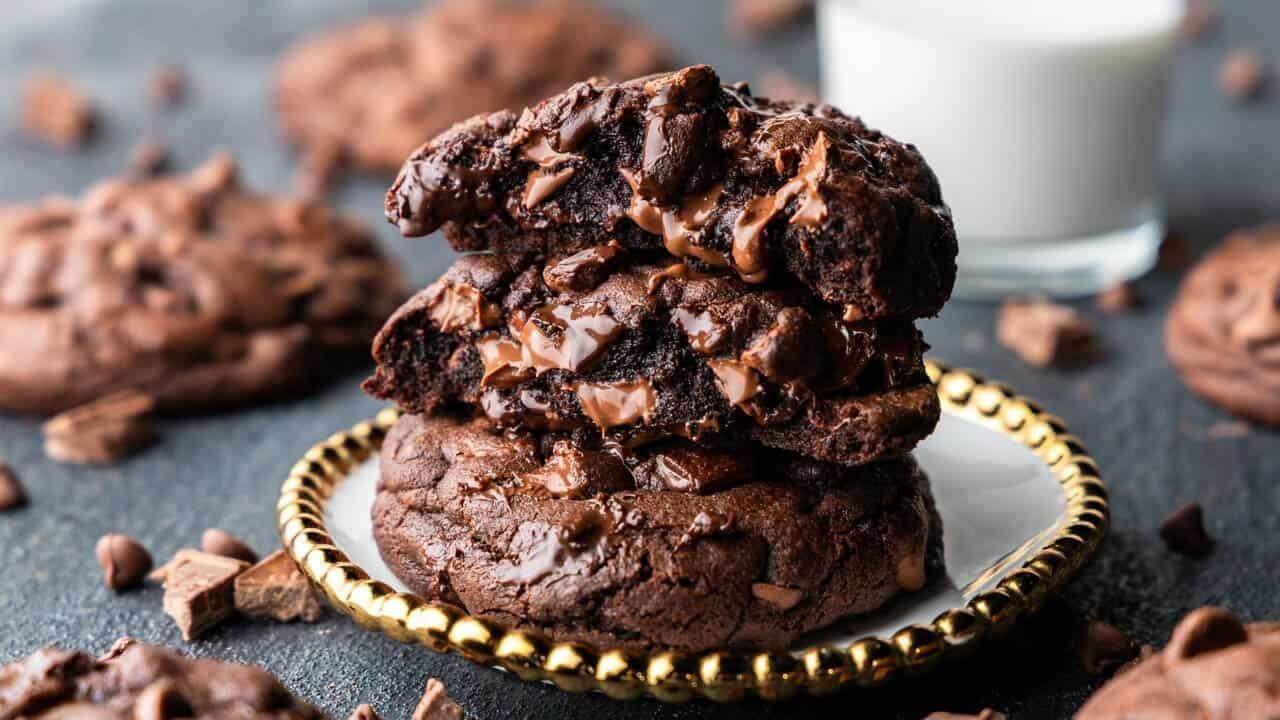
There is something special about biting into a warm chocolate cookie filled with melted chocolate pieces. The slightly crisp edges, soft center, and rich cocoa flavor make every bite delicious. If you enjoy chocolate desserts, a double chunk chocolate cookie is one of the most satisfying treats you can prepare at home.
Unlike ordinary chocolate chip cookies, double chocolate chunk cookies contain chocolate in two forms. Cocoa powder gives the cookie dough its deep chocolate flavor, while large chocolate chunks create rich, melted pockets throughout each cookie.
The best part is that you do not need professional baking experience or expensive equipment to make them. With basic ingredients, a mixing bowl, and an oven, you can prepare delicious homemade cookies.
However, getting the perfect texture requires more than simply mixing ingredients and baking them. The type of cocoa powder, temperature of the butter, amount of flour, chilling time, and baking duration all influence the final result.
In this complete guide, you will learn how to make double chunk chocolate cookies step by step. You will also discover ingredient substitutes, baking tips, common mistakes, storage instructions, and answers to frequently asked questions.
What Is a Double Chunk Chocolate Cookie?
A double chunk chocolate cookie is a rich chocolate-flavored cookie made with cocoa powder and generous pieces of chocolate mixed into the dough.
The word “double” refers to the two sources of chocolate flavor: the cocoa-based cookie dough and the chocolate chunks.
These cookies are usually darker than traditional chocolate chip cookies. Depending on the recipe and baking method, they can have a chewy texture, slightly crisp edges, and a soft, brownie-like center.
Some recipes include dark chocolate, while others use milk chocolate, semisweet chocolate, or a combination of different varieties.
How Are Double Chocolate Chunk Cookies Different From Regular Cookies?
| Feature | Regular chocolate chip cookie | Double chocolate chunk cookie |
|---|---|---|
| Dough color | Light golden or brown | Dark chocolate brown |
| Main flavor | Butter, vanilla, and chocolate | Rich cocoa and chocolate |
| Chocolate content | Usually chocolate chips | Cocoa powder and chocolate chunks |
| Texture | Often chewy or crisp | Often soft, chewy, and fudgy |
| Chocolate intensity | Moderate | Strong |
| Appearance | Golden cookie with visible chips | Dark cookie with chocolate pockets |
A double chunk chocolate cookie is an excellent option when you want a dessert with a stronger chocolate flavor than a traditional cookie.
Why You Will Love This Double Chunk Chocolate Cookie Recipe?
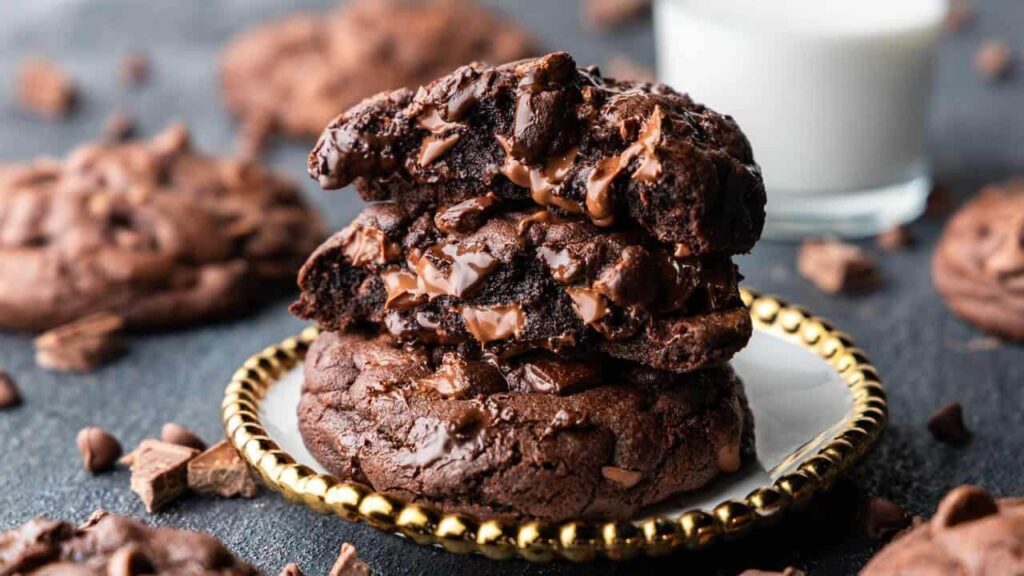
There are several reasons to try this homemade double chocolate cookie recipe.
Rich Chocolate Flavor
The combination of cocoa powder and chopped chocolate provides a deep chocolate taste.
Using good-quality chocolate can make a noticeable difference in both flavor and texture.
Soft and Chewy Centers
The recipe uses brown sugar and a short baking time to encourage a moist, chewy center.
The cookies continue to firm up after removal from the oven, so allowing them to cool on the baking sheet is important.
Slightly Crisp Edges
Proper baking helps the outer edges set while keeping the middle tender.
This contrast makes the cookies enjoyable without becoming excessively hard or dry.
Easy-to-Find Ingredients
Most of the ingredients are common baking supplies, including flour, butter, sugar, eggs, vanilla, and cocoa powder.
Suitable for Different Occasions
You can serve these cookies at birthday parties, family gatherings, holiday celebrations, or as an afternoon snack.
They also make thoughtful homemade gifts when packaged appropriately.
Double Chunk Chocolate Cookie Recipe Overview
Before starting, review the recipe details below.
| Recipe information | Details |
|---|---|
| Recipe name | Double Chunk Chocolate Cookie |
| Cuisine | American-style baking |
| Course | Dessert or snack |
| Difficulty | Beginner-friendly |
| Preparation time | 15 minutes |
| Chilling time | 30–60 minutes |
| Baking time | 10–12 minutes per batch |
| Cooling time | 10 minutes |
| Total time | Approximately 65–100 minutes |
| Yield | About 12 medium-large cookies |
| Oven temperature | 350°F (175°C) |
| Serving size | 1 cookie |
This is an original home-baking formula. The times and yield are practical estimates; actual results depend on your oven, ingredients, and portion size.
Ingredients for Double Chunk Chocolate Cookies
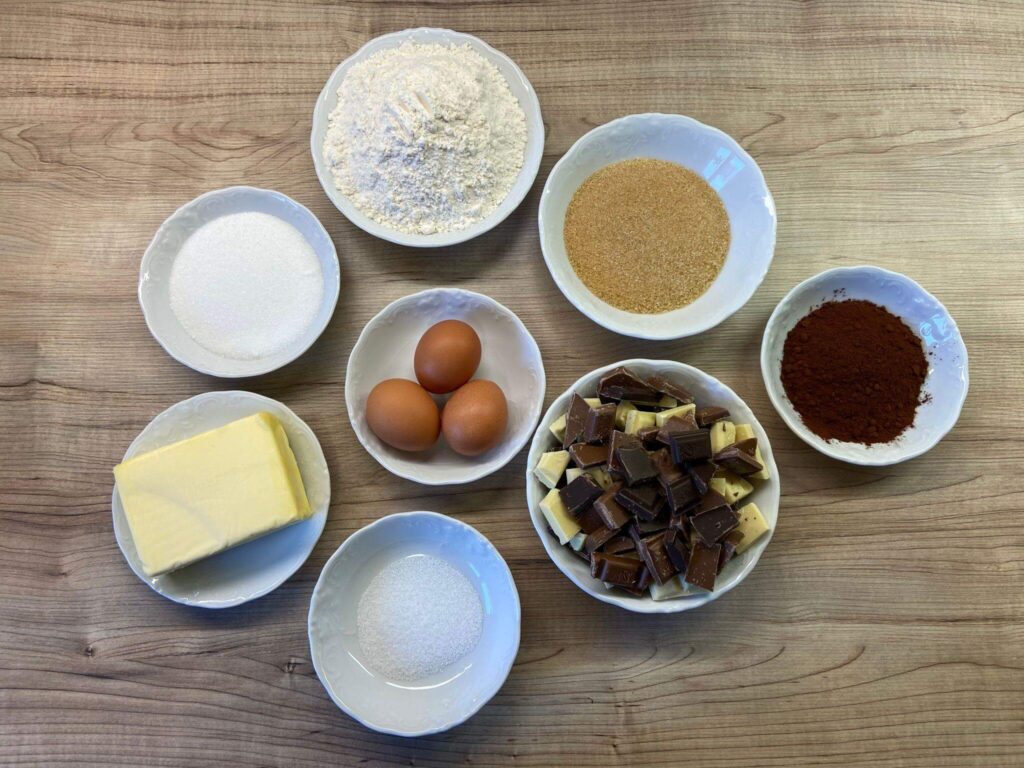
Using the correct quantity of each ingredient is important.
Too much flour can make cookies dry, while too much butter can cause excessive spreading.
For consistent results, use a digital kitchen scale whenever possible.
Complete Ingredient List
| Ingredient | Quantity | Purpose |
|---|---|---|
| All-purpose flour | 170 g (approximately 1⅓ cups plus 1 tablespoon) | Provides structure |
| Unsweetened natural cocoa powder | 35 g (approximately ⅓ cup plus 1 tablespoon) | Creates rich chocolate flavor |
| Unsalted butter | 115 g (½ cup) | Adds flavor and tenderness |
| Light brown sugar | 130 g (approximately ⅔ cup packed) | Encourages moisture and chewiness |
| Granulated white sugar | 70 g (approximately ⅓ cup) | Adds sweetness and helps with spreading |
| Large egg | 1 | Binds ingredients |
| Vanilla extract | 1 teaspoon | Adds flavor |
| Baking soda | ½ teaspoon | Helps the dough rise and spread |
| Fine salt | ½ teaspoon | Balances sweetness |
| Semisweet chocolate chunks | 180 g (approximately 1 cup) | Creates melted chocolate pockets |
| Flaky sea salt | Optional | Finishing garnish |
Ingredient note: Cup measurements are approximate because ingredient density and measuring methods vary. Gram measurements are more reliable.
1. All-Purpose Flour
All-purpose flour provides the main structure of the cookies.
If you add too much flour, the dough may become stiff and the cookies may bake into thick, dry rounds.
For best results, measure flour with a kitchen scale.
If using measuring cups, gently spoon flour into the cup and level it with a straight edge.
2. Cocoa Powder
Cocoa powder is responsible for the deep chocolate taste and dark appearance.
For this recipe, use unsweetened natural cocoa powder.
Natural cocoa is acidic and works well with the baking soda in this formula.
Dutch-process cocoa has a different acidity level. It can be used in recipes designed for it, but substituting it here may change the rise, color, and texture.
3. Unsalted Butter
Butter contributes flavor, richness, and tenderness.
Use softened butter that still feels slightly cool and holds its shape.
Avoid using completely melted butter in this particular recipe because it can change how the dough mixes and spreads.
4. Brown Sugar
Brown sugar contains molasses, which contributes moisture and a mild caramel flavor.
It helps create chewy double chocolate cookies.
5. Granulated Sugar
White sugar adds sweetness and affects spreading and edge texture.
Using both brown sugar and granulated sugar creates a more balanced cookie than relying entirely on one type.
6. Egg
The egg binds the ingredients together and contributes moisture and structure.
Using a room-temperature egg helps it combine more evenly with the butter mixture.
7. Vanilla Extract
Vanilla complements the flavor of chocolate.
A small amount adds depth without overpowering the cocoa.
8. Chocolate Chunks
Chocolate chunks are one of the most important ingredients in this recipe.
You can purchase ready-made chunks or chop a baking chocolate bar into pieces.
A mixture of medium and small pieces creates more varied chocolate pockets throughout the cookies.
What Type of Chocolate Is Best for Double Chocolate Chunk Cookies?
Choosing the right chocolate can make a significant difference.
| Chocolate type | Flavor | Best use |
|---|---|---|
| Dark chocolate | Rich and less sweet | Intense chocolate cookies |
| Semisweet chocolate | Balanced sweetness | Everyday chocolate cookies |
| Milk chocolate | Sweet and creamy | Sweeter, milder cookies |
| White chocolate | Sweet and vanilla-like | Flavor variations |
| Bittersweet chocolate | Strong cocoa flavor | Less-sweet adult-style desserts |
For a balanced result, semisweet chocolate is a practical choice.
If you prefer stronger cocoa flavor, use dark chocolate containing approximately 60–70% cocoa solids.
You can also combine semisweet and milk chocolate to create different levels of sweetness.
Equipment Needed to Make Double Chocolate Chunk Cookies
You do not need specialized bakery equipment.
Prepare the following items before beginning:
- Large mixing bowl
- Medium mixing bowl
- Electric hand mixer or sturdy whisk
- Silicone spatula
- Measuring cups and spoons
- Digital kitchen scale
- Baking sheet
- Parchment paper
- Cookie scoop or large spoon
- Cooling rack
- Oven
An electric mixer makes creaming butter and sugar easier, but you can also mix them by hand with additional effort.
How to Make Double Chunk Chocolate Cookies Step by Step
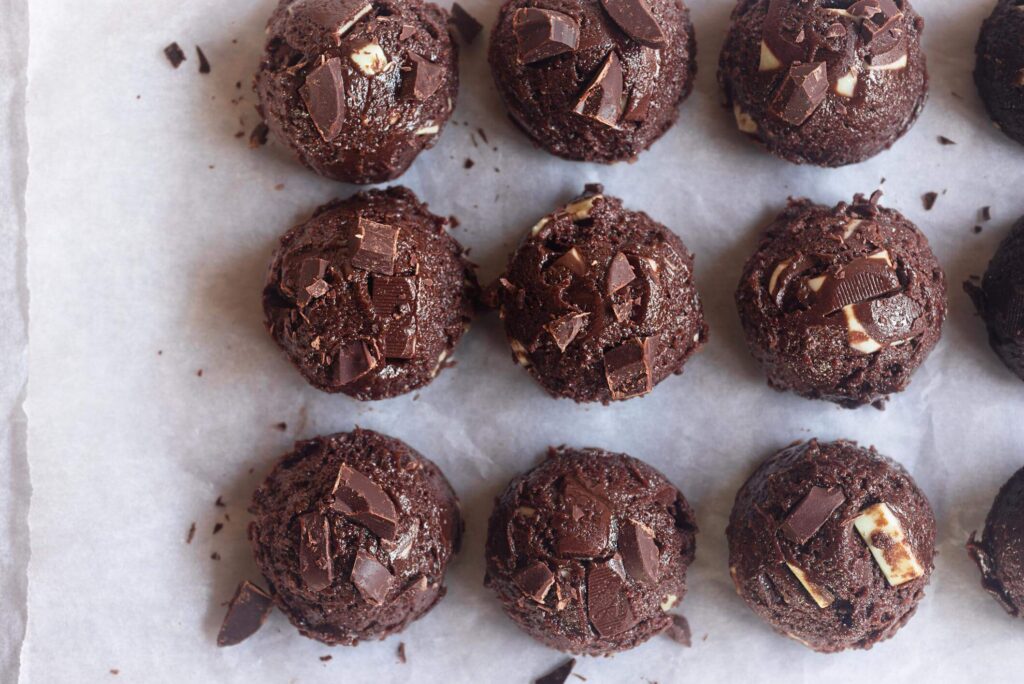
Follow the instructions carefully to prepare cookies with a rich flavor and soft center.
Step 1: Measure and Prepare the Ingredients
Before mixing, measure all your ingredients.
Allow the butter to soften until it can be pressed gently with your finger without appearing oily or melted.
Take the egg out of the refrigerator shortly before mixing.
Chop the chocolate into chunks if you are using a chocolate bar.
Reserve a small handful of chunks to place on top of the cookies before baking.
This creates an attractive bakery-style appearance.
Baking tip: Measuring ingredients before starting reduces mistakes and makes the process smoother.
Step 2: Combine the Dry Ingredients
Take a medium mixing bowl.
Add:
- 170 g all-purpose flour
- 35 g natural cocoa powder
- ½ teaspoon baking soda
- ½ teaspoon fine salt
Whisk until the ingredients are evenly mixed.
If the cocoa powder contains lumps, sift it before adding it to the bowl.
Mixing dry ingredients separately helps distribute the baking soda and cocoa powder throughout the dough.
Set the bowl aside.
Step 3: Cream Butter and Sugar
In a large mixing bowl, add the softened butter, brown sugar, and granulated sugar.
Beat the mixture with an electric mixer on medium speed for approximately two minutes.
The mixture should become smoother and slightly lighter.
Scrape down the sides of the bowl with a silicone spatula.
Avoid beating for an unnecessarily long time. Excessive aeration may encourage a more cake-like texture.
Step 4: Add Egg and Vanilla Extract
Crack the egg into the butter and sugar mixture.
Add one teaspoon of vanilla extract.
Beat on low to medium speed until combined.
The mixture should become fairly smooth.
Scrape the bowl again to make sure no butter remains unmixed around the sides.
Step 5: Add the Dry Ingredients
Gradually add the prepared flour and cocoa mixture to the wet ingredients.
Mix on low speed or use a silicone spatula.
Stop mixing when no visible dry flour remains.
The dough should look thick, chocolate-colored, and slightly sticky.
Avoid overmixing because excessive gluten development can produce tougher cookies.
Step 6: Fold in the Chocolate Chunks
Add most of the chopped chocolate to the dough.
Reserve about 20–30 g for decorating the tops.
Gently fold the chocolate into the mixture using a spatula.
Make sure the pieces are distributed throughout the dough.
This step gives every cookie a generous amount of chocolate.
Step 7: Chill the Cookie Dough
Cover the mixing bowl and place it in the refrigerator for approximately 30–60 minutes.
Chilling helps firm the butter and makes the dough easier to portion.
It can also help reduce excessive spreading during baking.
If the dough becomes too firm after longer refrigeration, allow it to sit briefly at room temperature until it can be scooped.
Do not leave egg-containing cookie dough unrefrigerated for extended periods.
Step 8: Preheat the Oven
Preheat your oven to 350°F (175°C).
Line a baking sheet with parchment paper.
Position the oven rack near the center.
Allow the oven to reach the selected temperature before adding the cookies.
An oven thermometer can be helpful if your oven tends to run hotter or cooler than its setting.
Step 9: Shape the Cookie Dough
Use a cookie scoop or spoon to divide the dough into approximately 12 portions.
Each portion will be roughly 50 g, depending on the final dough weight.
Roll each portion lightly into a ball.
Place the dough balls on the prepared baking sheet with approximately 2–3 inches of space between them.
Do not flatten them completely.
Press a few reserved chocolate chunks into the tops.
These pieces will remain visible after baking.
Step 10: Bake the Cookies
Place the baking sheet in the preheated oven.
Bake for approximately 10–12 minutes.
The edges should look set, while the centers may still appear slightly soft.
Because the dough is dark, the cookie color is not a reliable indicator of doneness.
Look for a surface that has lost its raw, wet appearance around the edges.
If the cookies are very large or the dough is particularly cold, they may require slightly more time.
Avoid overbaking if you want a soft and fudgy center.
Step 11: Allow the Cookies to Cool
Remove the baking sheet from the oven.
Leave the cookies on the sheet for approximately five minutes.
During this time, the cookies will continue to firm up.
Carefully transfer them to a cooling rack.
Allow them to cool for another five minutes or longer before serving.
Moving extremely soft cookies immediately after baking may cause them to break.
Step 12: Serve and Enjoy
Your homemade double chunk chocolate cookies are ready.
Serve them slightly warm for soft chocolate pockets or allow them to cool completely for a firmer texture.
You can add a tiny pinch of flaky sea salt to the tops if you enjoy a sweet-and-salty combination.
How to Make Bakery-Style Double Chocolate Chunk Cookies
Bakery-style chocolate cookies usually stand out because of their generous size, appealing shape, and visible pieces of chocolate.
You can achieve a similar appearance at home by following a few techniques.
Use Chopped Chocolate Instead of Only Chips
Chopped baking chocolate creates irregular pieces.
Some melt into large chocolate pockets, while smaller pieces spread throughout the dough.
Chocolate chips are designed to hold their shape more consistently, so the appearance and melting behavior may differ.
Make Slightly Taller Dough Portions
Instead of pressing the dough completely flat, shape each portion into a slightly taller mound.
This can encourage a thicker cookie.
Chill the Dough
Chilling helps control dough consistency and may reduce spreading.
It is particularly useful when the kitchen is warm.
Reserve Chocolate for the Tops
Press a few chocolate pieces into each dough portion before baking.
This gives the finished cookies a more attractive appearance.
Avoid Overbaking
The centers should look set enough to hold their shape but should not be baked until completely dry.
Allow the cookies to finish firming on the hot baking sheet.
How to Get Soft, Chewy, and Fudgy Chocolate Cookies
Cookie texture is influenced by ingredients, mixing, and baking.
For Soft Cookies
Use the recommended flour quantity and avoid overbaking.
Remove the cookies when their edges are set and let them cool on the baking sheet.
For Chewy Cookies
Brown sugar helps provide a moist and chewy texture.
Properly chilling the dough and avoiding excessive flour can also help.
For Fudgy Cookies
Chocolate-rich dough, generous chunks, and carefully controlled baking time encourage a brownie-like center.
Do not add extra flour simply because the dough feels slightly sticky.
For Crispier Cookies
You can experiment with slightly smaller or flatter dough portions and a modestly longer baking time.
However, baking too long can make chocolate cookies dry rather than pleasantly crisp.
Common Double Chocolate Chunk Cookie Problems and How to Fix Them
Even experienced home bakers sometimes encounter problems.
The following troubleshooting table can help identify likely causes.
| Problem | Possible reason | Practical solution |
|---|---|---|
| Cookies spread too much | Butter too warm or dough insufficiently chilled | Chill dough and check measurements |
| Cookies are dry | Too much flour or excessive baking time | Weigh flour and shorten baking time |
| Cookies are too thick | Excess flour or very cold dough | Check ingredient weights and portion shape |
| Cookies are hard | Overbaking | Remove when edges are set |
| Cookies have a cakey texture | Excessive mixing or aeration | Mix only until combined |
| Dough is crumbly | Incorrect measurements | Recheck ingredients before adjusting |
| Chocolate does not melt into pockets | Type of chocolate used | Try chopped baking chocolate |
| Bottoms burn | Oven heat or unsuitable baking sheet | Use a lined, light-colored tray and verify temperature |
| Cookies bake unevenly | Uneven oven heating | Bake one tray at a time and rotate if needed |
Why Are My Double Chocolate Cookies Flat?
Flat cookies can result from several factors.
The butter may have been too warm, the dough may not have been chilled sufficiently, or the flour quantity may have been too low.
Start by measuring ingredients accurately and chilling the dough before baking.
Also make sure your baking soda has not expired.
Why Are My Chocolate Cookies Dry?
Dry cookies are commonly associated with excessive flour or prolonged baking.
Because cocoa powder also absorbs moisture, adding extra cocoa without adjusting the recipe may create a dry dough.
Use the specified cocoa quantity and carefully monitor baking time.
Why Do My Cookies Taste Bitter?
Some cocoa powders and dark chocolates have naturally strong bitter notes.
If your cookies taste excessively bitter, check whether you used unsweetened cocoa powder and whether the chocolate variety matches your preferences.
Avoid accidentally substituting a much larger quantity of very dark chocolate.
Double Chunk Chocolate Cookie Variations
Once you understand the basic recipe, you can create several delicious variations.
1. Triple Chocolate Chunk Cookies
Replace part of the semisweet chocolate with milk chocolate and white chocolate.
For example, use 60 g of each type.
This creates different flavors and colors throughout the cookies.
2. Dark Chocolate Chunk Cookies
Use dark chocolate containing approximately 70% cocoa solids.
This version offers a more intense chocolate taste and less sweetness from the chocolate pieces.
3. Chocolate Walnut Cookies
Add approximately 50 g of chopped walnuts to the dough.
Reduce the chocolate chunks slightly if you want to maintain a similar quantity of mix-ins.
Walnuts add crunch and a mild nutty flavor.
4. Chocolate Peanut Butter Cookies
Add a small spoonful of peanut butter to the center of each dough portion before shaping it closed.
This is an experimental variation, so baking time and dough thickness may need adjustment.
Use smooth, thick peanut butter rather than a very runny variety.
5. White Chocolate Chunk Cookies
Replace the semisweet chocolate chunks with white chocolate pieces.
The creamy sweetness creates a contrast with the cocoa-based dough.
6. Chocolate Cookies With Sea Salt
Sprinkle a small amount of flaky sea salt over the cookies immediately after baking.
The salt enhances the chocolate flavor without making the dessert noticeably salty.
Can You Make Double Chunk Chocolate Cookies Without Eggs?
Yes, egg-free chocolate cookies are possible, but replacing the egg changes the structure and moisture balance.
For an experimental egg-free version of this recipe, you could try approximately 3 tablespoons of aquafaba in place of the large egg.
However, this is not a tested equivalent for the formula above, and the cookies may spread differently or become more delicate.
For consistent egg-free results, use a recipe developed specifically without eggs.
Can You Make These Cookies Without Butter?
Butter contributes flavor, tenderness, and spreading characteristics.
A dairy-free baking margarine or plant-based butter substitute may work, but the outcome depends on its fat and water content.
Choose a product designed for baking, preferably with a fat content similar to traditional butter.
Avoid replacing butter with the same quantity of ordinary liquid oil without adjusting the recipe.
The change can significantly affect the dough and cookie texture.
Can You Make Double Chocolate Cookies With Gluten-Free Flour?
You can experiment with a gluten-free all-purpose flour blend formulated for a one-to-one replacement.
However, different blends absorb liquid differently and may contain varying amounts of binding ingredients.
The cookies may require changes to the chilling time or moisture level.
For people with celiac disease, use certified gluten-free ingredients and prevent cross-contact during preparation.
Double Chocolate Chunk Cookies vs. Brownie Cookies
Double chocolate chunk cookies and brownie cookies share several characteristics, but they are not always the same.
| Feature | Double chocolate chunk cookies | Brownie cookies |
|---|---|---|
| Main goal | Soft or chewy chocolate cookie | Brownie-like flavor and texture |
| Chocolate | Cocoa powder and chunks | Often includes melted chocolate |
| Texture | Chewy with chocolate pockets | Often fudgy with a delicate crust |
| Dough | Usually thick and scoopable | May be softer or batter-like |
| Appearance | Dark cookie with visible chunks | Often has a glossy, crackled top |
Both desserts are suitable for chocolate lovers.
Choose double chocolate chunk cookies when you want a traditional cookie structure with generous chocolate pieces.
How to Store Double Chunk Chocolate Cookies
Proper storage helps preserve flavor and texture.
Storing at Room Temperature
Allow the cookies to cool completely.
Place them in an airtight container.
Store in a cool, dry place away from direct sunlight.
For best quality, enjoy them within approximately three to four days.
Very warm or humid conditions may shorten their acceptable storage time.
Storing in the Refrigerator
Refrigeration is not usually necessary for plain baked cookies.
It can also make them firmer.
If refrigeration is needed because of hot conditions or additional perishable fillings, keep them in an airtight container and follow the storage requirements of those ingredients.
Freezing Baked Cookies
Allow the cookies to cool completely.
Arrange them in a freezer-safe container or bag.
Separate layers with parchment paper if necessary.
Freeze for approximately two to three months for best quality.
Thaw in the refrigerator or at room temperature while keeping the cookies protected from contamination.
Freezing Cookie Dough
Cookie dough can be prepared in advance.
Follow these steps:
- Prepare the dough.
- Shape it into individual portions.
- Arrange the portions on a lined tray.
- Freeze until firm.
- Transfer them into a freezer-safe bag or container.
- Label the container with the preparation date.
- Keep frozen until needed.
For best quality, use the frozen dough within about two to three months.
You can bake portions directly from frozen, but they may need a few additional minutes in the oven.
Check the edges and centers rather than relying only on the clock.
How to Reheat Double Chocolate Chunk Cookies?
If you prefer warm cookies, reheating can soften the chocolate again.
Oven Method
Preheat the oven to approximately 300°F (150°C).
Place the cookies on a baking sheet.
Warm them for around three to five minutes, depending on their size and starting temperature.
Remove them before they become dry.
Microwave Method
Place one cookie on a microwave-safe plate.
Warm it for approximately five to ten seconds.
Microwave power varies, so use short intervals.
Be careful because melted chocolate can become unexpectedly hot.
Best Ways to Serve Double Chunk Chocolate Cookies
These cookies taste delicious on their own, but you can also pair them with other desserts or drinks.
With a Glass of Milk
Milk provides a mild contrast to the rich chocolate flavor.
You can serve the cookies warm or at room temperature.
With Vanilla Ice Cream
Place a scoop of vanilla ice cream between two cooled cookies to make a homemade ice cream sandwich.
Freeze the sandwich briefly to help it hold together.
With Coffee
The rich chocolate flavor pairs well with coffee, espresso, or a latte.
With Hot Chocolate
Serve a smaller cookie alongside a cup of hot chocolate for a chocolate-focused dessert.
As a Homemade Gift
Allow the cookies to cool completely before packaging them.
Use a clean food-safe box or airtight container.
Label any major allergens, especially if the cookies are being shared with other households.
Tips for Baking Double Chocolate Cookies in Different Ovens
Not every home oven heats in the same way.
Conventional Oven
For this recipe, start with 350°F (175°C).
Bake one tray near the center of the oven for approximately 10–12 minutes.
Fan-Assisted or Convection Oven
A fan-assisted oven may bake cookies more quickly.
A reasonable starting point is approximately 325°F (165°C), but refer to your oven manual.
Check the cookies a few minutes earlier than you would in a conventional oven.
OTG Oven
If using an oven toaster griller, preheat it thoroughly.
Select an appropriate baking mode with balanced heating, as recommended by the manufacturer.
Place the tray where the cookies will receive even heat.
Because compact ovens may have strong hot spots, check the first batch carefully.
Air Fryer
Air fryers vary considerably in capacity and airflow.
For small batches, you can experiment with approximately 320°F (160°C) using a suitable baking accessory.
Bake a test cookie first and adjust the time based on its appearance.
Do not place loose parchment paper in an empty preheating air fryer, as it may contact the heating element.
How to Make Cookies for Parties and Special Occasions
Double chocolate chunk cookies are convenient for parties because the dough can be prepared ahead of time.
If you need a larger batch, multiply the ingredient quantities carefully.
Ingredient Quantities for Different Batch Sizes
| Ingredient | 12 cookies | 24 cookies | 36 cookies |
|---|---|---|---|
| Flour | 170 g | 340 g | 510 g |
| Cocoa powder | 35 g | 70 g | 105 g |
| Butter | 115 g | 230 g | 345 g |
| Brown sugar | 130 g | 260 g | 390 g |
| White sugar | 70 g | 140 g | 210 g |
| Eggs | 1 | 2 | 3 |
| Vanilla extract | 1 tsp | 2 tsp | 3 tsp |
| Baking soda | ½ tsp | 1 tsp | 1½ tsp |
| Salt | ½ tsp | 1 tsp | 1½ tsp |
| Chocolate chunks | 180 g | 360 g | 540 g |
Larger batches may require several baking trays.
For consistent results, bake one tray at a time if your oven heats unevenly.
Do not crowd the baking sheet because the dough needs room to spread.
How to Know When Double Chocolate Chunk Cookies Are Done
Dark chocolate cookies can be difficult to judge because they do not develop obvious golden-brown edges.
Instead, look for these signs:
- The edges appear set rather than wet.
- The top has lost most of its raw, shiny appearance.
- The cookies have spread slightly.
- The centers remain soft but are not liquid.
- The cookies become firmer after resting on the baking sheet.
Do not taste raw cookie dough. Raw flour and uncooked eggs can carry harmful microorganisms.
If you are unsure whether a cookie is fully baked, let a test cookie cool and inspect its center before adjusting the next batch.
Also Read:
- www.cvshealthsurvey.com – Take the CVS Health Survey With Your Receipt
- Culver’s Restaurant Survey – Complete Guide to Receipt Codes, Free Scoops and Rewards
- Is Survey World Legit or a Scam? Complete SurveyWorld Review 2026
- www.mcdvoice.com/survey: Complete McDonald’s Customer Satisfaction Survey Guide
Frequently Asked Questions About Double Chunk Chocolate Cookies
What is a double chunk chocolate cookie?
A double chunk chocolate cookie is a chocolate-flavored cookie containing cocoa powder and large pieces of chocolate. The cocoa creates the dark cookie dough, while chocolate chunks add melted chocolate pockets throughout the cookie. These cookies are often made with butter, brown sugar, flour, eggs, and vanilla. Their texture can range from soft and chewy to slightly crisp, depending on the recipe and baking time.
How do you make double chocolate chunk cookies soft and chewy?
To make soft and chewy double chocolate chunk cookies, use accurately measured flour, brown sugar, and properly softened butter. Avoid overmixing the dough after adding the dry ingredients. Chill the dough before baking and remove the cookies when their edges are set. Allowing the cookies to rest on the hot baking sheet also helps them develop a soft center without becoming excessively dry.
What is the difference between double chocolate cookies and chocolate chip cookies?
Traditional chocolate chip cookies usually contain a light-colored dough flavored with butter and vanilla, with chocolate chips mixed throughout. Double chocolate cookies generally contain cocoa powder or melted chocolate in the dough itself, along with additional chocolate pieces. As a result, they have a darker appearance and stronger chocolate flavor.
Do double chocolate chunk cookies need to be refrigerated before baking?
Refrigerating the dough is recommended for this recipe because chilling helps the butter firm up and can reduce excessive spreading. Approximately 30–60 minutes is a practical starting point. However, some cookie recipes are specifically formulated for immediate baking. Always follow the chilling instructions for the recipe you are using rather than assuming every cookie dough requires refrigeration.
Why are my double chocolate chunk cookies hard?
Hard cookies are often caused by overbaking, excessive flour, or incorrect ingredient measurements. Cookies continue to firm after leaving the oven, so baking until the centers look completely dry may lead to a hard texture. Use a kitchen scale, monitor baking time carefully, and remove the cookies when the edges have set but the centers are still slightly soft.
Can I use chocolate chips instead of chocolate chunks?
Yes, chocolate chips can replace chocolate chunks in many cookie recipes. However, the finished texture may differ. Chocolate chips generally retain their shape more consistently, while chopped baking chocolate can create irregular melted pockets. If you want a more dramatic bakery-style appearance, chopped chocolate bars are a useful option.
How long should double chocolate cookies bake?
For medium-large cookies weighing approximately 50 g each, a starting baking time is 10–12 minutes at 350°F (175°C) in a conventional oven. The exact time depends on the oven, dough temperature, and cookie size. Smaller cookies may bake faster, while large frozen portions may need additional time. Look for set edges and centers that no longer appear raw.
Can you freeze double chocolate chunk cookie dough?
Yes. Portion the prepared dough into balls and freeze them on a lined tray until firm. Transfer the frozen pieces to a freezer-safe container and label them. For best quality, use the dough within approximately two to three months. Bake the dough directly from frozen if desired, allowing additional time as necessary.
What cocoa powder is best for double chocolate chunk cookies?
Unsweetened natural cocoa powder is recommended for this particular recipe because it works with the specified baking soda. Dutch-process cocoa is another popular choice for chocolate cookies, but it has a different acidity level. Substituting one type for another may affect the rise, color, and flavor, so follow the recipe’s cocoa powder recommendation.
How do you keep homemade chocolate cookies fresh?
Allow the cookies to cool completely before placing them in an airtight container. Store them at room temperature in a cool, dry place and enjoy them within approximately three to four days for best quality. For longer storage, freeze them in a suitable container. Avoid leaving warm cookies in sealed packaging because condensation can affect their texture.
Can I make double chocolate chunk cookies without brown sugar?
You can experiment with replacing brown sugar with granulated sugar, but the texture and flavor will change. Brown sugar contributes moisture and chewiness, while white sugar generally creates a different spreading and edge texture. If you replace all the brown sugar, the cookies may become less chewy. For a more predictable result, use a recipe specifically developed without brown sugar.
Are double chocolate chunk cookies the same as brownie cookies?
Not exactly. Double chocolate chunk cookies use chocolate-flavored cookie dough with added chocolate pieces. Brownie cookies are designed to resemble brownies more closely, often featuring a fudgy center and a delicate, crackled top. Both desserts provide rich chocolate flavor, but their ingredients, mixing methods, and final textures can differ.
Final Thoughts
Making a delicious double chunk chocolate cookie at home is easier when you understand the ingredients and follow a reliable baking process.
The combination of unsweetened cocoa powder, brown sugar, butter, and generous chocolate chunks creates a flavorful cookie with a soft center and a rich chocolate taste.
For the best results, measure your ingredients carefully, use good-quality chocolate, chill the cookie dough, and avoid overbaking.
Remember that cookie texture also depends on your oven, the size of your dough portions, and the type of chocolate you choose.
Whether you prefer soft and chewy double chocolate cookies, thick bakery-style cookies, or rich fudgy chocolate cookies, this recipe provides a starting point that you can adapt to your taste.
Serve them warm with milk, share them with family, or prepare the dough ahead of time for a convenient homemade dessert.
Author

admin@myncblogs.com